The Glenlivet has landed on a head-scratching selling point.
How does Scotland’s oldest legally operating distillery stay relevant in 2024? And how does it justify a roughly $46,240 price tag (based on current EUR-to-USD exchange rates) for its ultra-rare 50-year-old single malt Scotch? By slapping AI-generated art on its packaging, apparently.
Over the past year, major brands from Anthropologie to Coca-Cola have faced fierce backlash for using shoddy AI art—criticized for feeling soulless and cutting corners on creativity . Yet The Glenlivet stands out as a rare luxury name that’s not just using AI, but highlighting it as a value-adding feature .
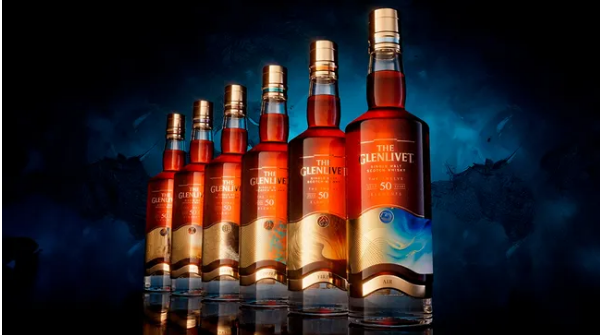
Even heritage brands need to evolve, but AI art feels bizarrely misaligned for a distillery that’s been crafting single malts since 1824. Now part of Chivas Brothers, a subsidiary of France’s Pernod Ricard, The Glenlivet still anchors its identity in tradition and artisanal craftsmanship—traits that define high-end spirits .
Luxury brands thrive on showcasing the human effort behind their products. Every detail, from distillation to packaging, tells a story of meticulous work. In an era where low-cost AI art is ubiquitous, that human touch has become an even more valuable marker of premium quality .
But for its ultra-exclusive The Twelve Elements collection—launched to mark the brand’s 200th anniversary—The Glenlivet is leaning into “future-forward” branding . Each of the 12 bottles features AI art representing a key whisky-making element, from “fire” and “water” to “heritage” and “angel’s share” . The collection debuts on The Whisky Exchange Cabinet, a blockchain-powered marketplace that lets collectors buy, store, and resell bottles with digital ownership certificates—all while accepting credit cards and traditional currency, not just crypto .

“The elements—both spiritual and scientific—are the foundation of our heritage and our drive for bravery and innovation,” a brand spokesperson explained. “As a bold, original brand, the digital world is a natural progression, and AI art lets us push whisky’s boundaries in exciting new ways.”
But does AI art truly complement a whisky that’s been aging in Speyside cellars since 1974? This rare expression is crafted from two handpicked casks, blending bourbon barrel sweetness with toasted oak and ginger spice . AI art comes off as cheap, disposable, and interchangeable—especially when stacked against the option of commissioning a human artist for custom pieces . The blockchain marketplace is innovative on its own, but is AI art just a lazy stand-in for “innovation” simply because it’s trendy?